


Catering kitchen cleaning for hotel events
Published on
3 min read
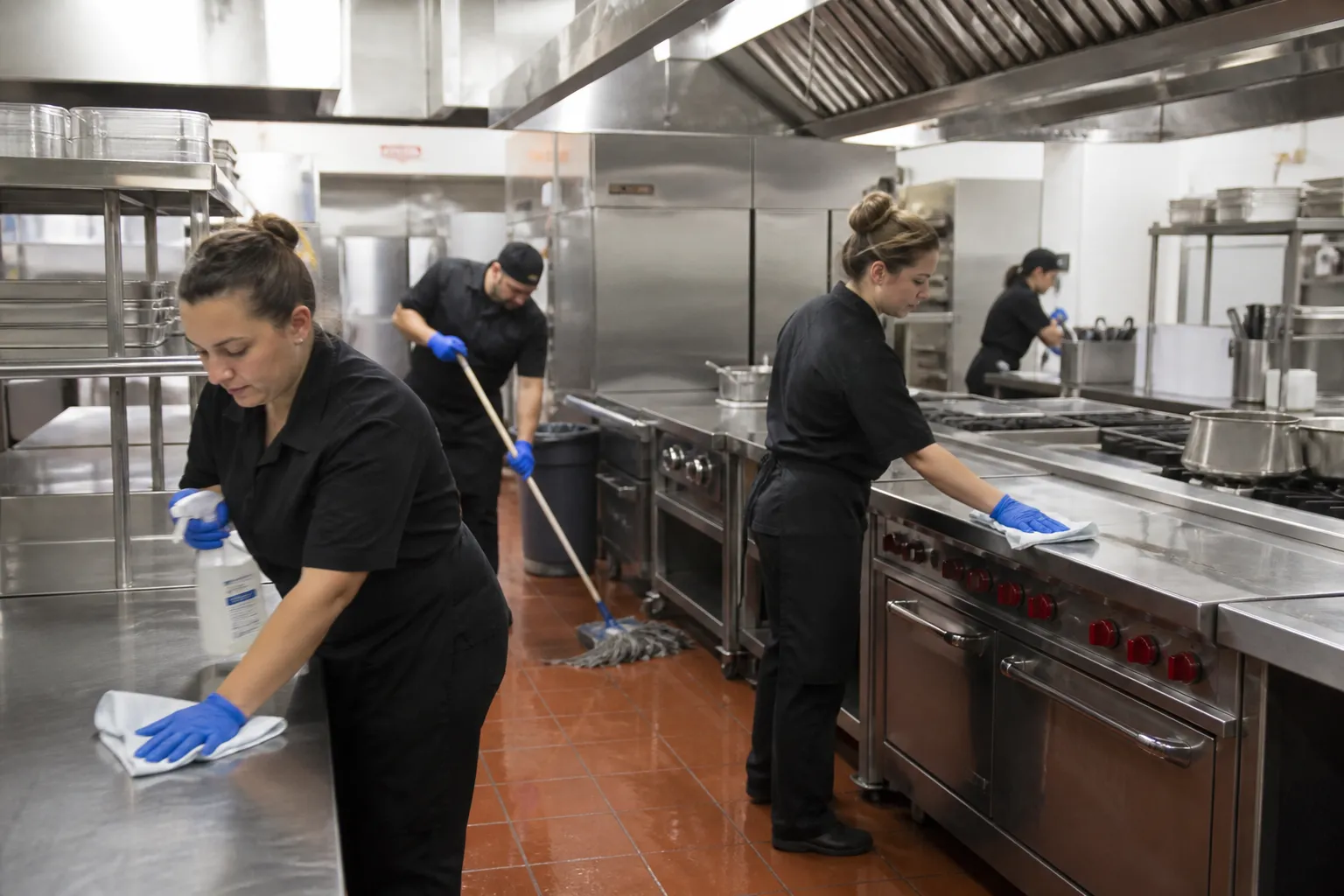
An event with catering puts a hotel kitchen under a very different kind of pressure from day-to-day service: higher preparation volumes, tighter timing, and often additional temporary staff working alongside the regular team. Cleaning after this kind of event needs dedicated organisation, different from the routine end-of-service clean.
This article explains how to organise kitchen cleaning after a catering service or a banqueting event in a hotel.
Contents
- Why an event changes the kitchen’s workload
- Cleaning during the event: not just after
- Post-event sanitising: the priorities
- High-use equipment and surfaces
- Managing waste generated by the event
- Coordination between kitchen staff and cleaning staff
- HACCP documentation after an event
Why an event changes the kitchen’s workload
During a catering event, the kitchen runs at a pace and volume far above daily service: more dishes prepared within a tight window, more equipment used at the same time, and often higher time pressure that leaves less attention for tidying as the service runs. This results in a build-up of mess and disorder that needs a more structured post-event intervention than usual.
Cleaning during the event: not just after
A good protocol includes intermediate cleaning moments even while the event is running, not just at the end: work surfaces cleared and cleaned between courses, equipment put back correctly, and periodic checks of areas prone to build-up (hobs, washing-up areas). This approach significantly reduces the final cleaning workload and maintains food safety conditions throughout the event.
Post-event sanitising: the priorities
At the end of the event, sanitising priorities follow a precise order: first surfaces in direct contact with food (worktops, chopping boards, cooking equipment), then surfaces in indirect contact (floors, walls near preparation areas), and finally secondary service areas. This order ensures the most hygiene-critical surfaces get priority attention even when time is tight.
High-use equipment and surfaces
Equipment used intensively during an event (ovens, hobs, industrial dishwashers) builds up residue faster than usual and needs a more thorough check than daily service requires. Less visible components also need checking, such as extractor hood filters, which clog faster than normal during an event with intensive cooking.
Managing waste generated by the event
A catering event generates a far higher volume of organic waste and packaging than daily service, often concentrated within a short time window. It is important to plan adequate temporary storage capacity and organise handover to the property’s collection points without leaving visible or smelly build-up in the hours following the event.
Coordination between kitchen staff and cleaning staff
A successful event needs close coordination between kitchen staff, who know the critical points that came up during service, and cleaning staff, who need to step in right after. A short handover on any critical issues (a spill not yet cleaned, a piece of equipment that had a problem) makes the sanitising job more targeted and effective.
Our cleaning service for hotels includes dedicated protocols for kitchen sanitising after events and catering services.
HACCP documentation after an event
As with daily service, post-event sanitising should also be documented under the property’s HACCP plan, with particular attention to any deviations from the standard routine (for example, using external equipment brought in by an outside caterer). This documentation matters both for internal traceability and in the event of a health authority inspection.
If you regularly host catering events at your property and want to set up a dedicated sanitising protocol, get in touch for an assessment.