


Dry cleaning hotel rugs: when it's the right choice
Published on
3 min read
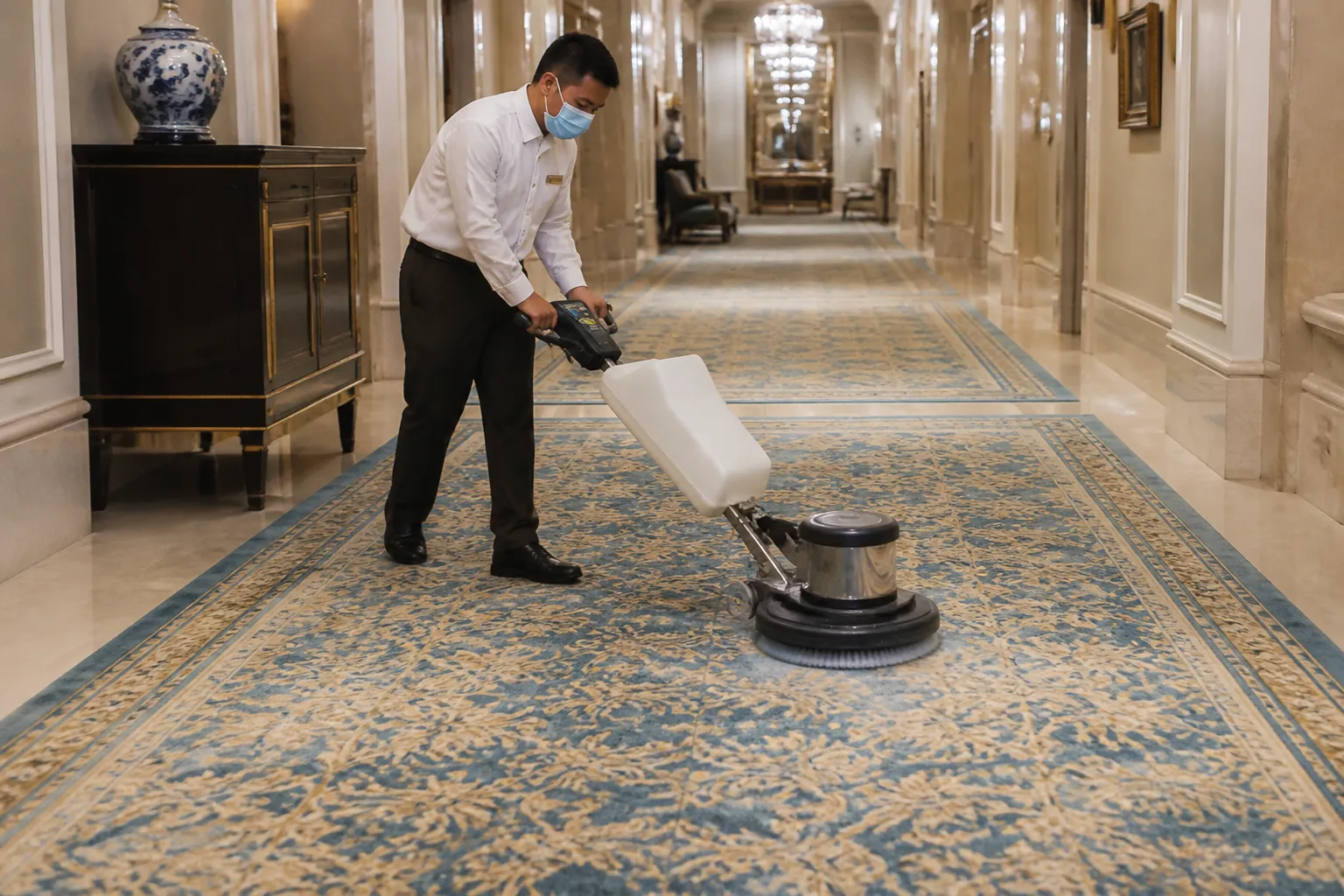
Rugs in hotels, especially valuable or large ones found in lobbies and common areas, raise a problem that fitted carpet does not: it is not always possible or advisable to wash them with water. Delicate natural fibres, unstable dyes, or simply the impossibility of guaranteeing adequate drying time make dry cleaning the safer choice in many cases.
This article explains when dry cleaning is the right choice for hotel rugs and how this type of work is carried out.
Contents
- Why not every rug can be washed with water
- How dry cleaning works
- When it’s the right choice
- Valuable rugs: an extra layer of care
- Advantages over water-based washing
- Limits of dry cleaning
- How to decide on the right technique with your supplier
Why not every rug can be washed with water
Some rugs, particularly those in fine wool, silk or with natural dyes, can suffer permanent damage on contact with water and liquid detergents: fibres can shrink, dyes can run or migrate, and uneven drying can leave visible marks once the rug is dry again. On these materials, water-based washing is a risk that often is not worth taking, especially on high-value or hard-to-replace pieces.
How dry cleaning works
Professional dry cleaning uses a powder or semi-solid detergent compound, spread over the rug’s surface and worked in with specific brushes to reach between the fibres. The compound absorbs dirt and greasy residue, and is then completely removed by vacuuming, taking the trapped dirt with it. The whole process introduces no water into the rug, eliminating the risk of shrinkage or dye migration.
When it’s the right choice
Dry cleaning is the preferred choice when a rug is made from water-sensitive materials, when adequate drying time cannot be guaranteed (for example in a walkway area that cannot stay closed for hours), or when it is a routine maintenance step between deeper washes. It does not fully replace deeper washing, but complements it effectively as part of periodic maintenance.
Valuable rugs: an extra layer of care
Valuable rugs, often unique pieces or of historic value found in the lobbies of high-end hotels, need a preliminary assessment by an expert technician before any work. Some antique rugs require specific cleaning techniques, different even from standard dry cleaning, and should be handled by specialists with documented experience on this type of piece.
Advantages over water-based washing
Beyond removing the risk of water damage, dry cleaning has the advantage of requiring shorter turnaround times and allows the treated area to be back in use quickly, often within a few hours of the work. This makes it particularly suited to high-traffic common areas, where a rug left wet for hours would be a significant inconvenience for guests and a slip risk.
Limits of dry cleaning
While effective for routine maintenance, dry cleaning has a lower deep-cleaning power than water-based washing for rugs that can tolerate it. On very dirty rugs or ones with deeply set stains, a more aggressive treatment may be needed, assessed case by case with a specialist technician.
Our common area cleaning service includes assessing the most suitable technique for each rug in a property, based on material and how the area is used.
How to decide on the right technique with your supplier
The choice between dry cleaning and water-based washing should always follow an assessment of the rug’s material and the context of use, not be applied automatically across an entire property. An experienced supplier proposes the most suitable technique case by case, explaining the reasoning behind the choice instead of applying a single method indiscriminately.
If you have valuable or delicate rugs at your property and want a professional assessment, get in touch for a site visit.