


Hotel sauna cleaning: hygiene protocol
Published on
3 min read
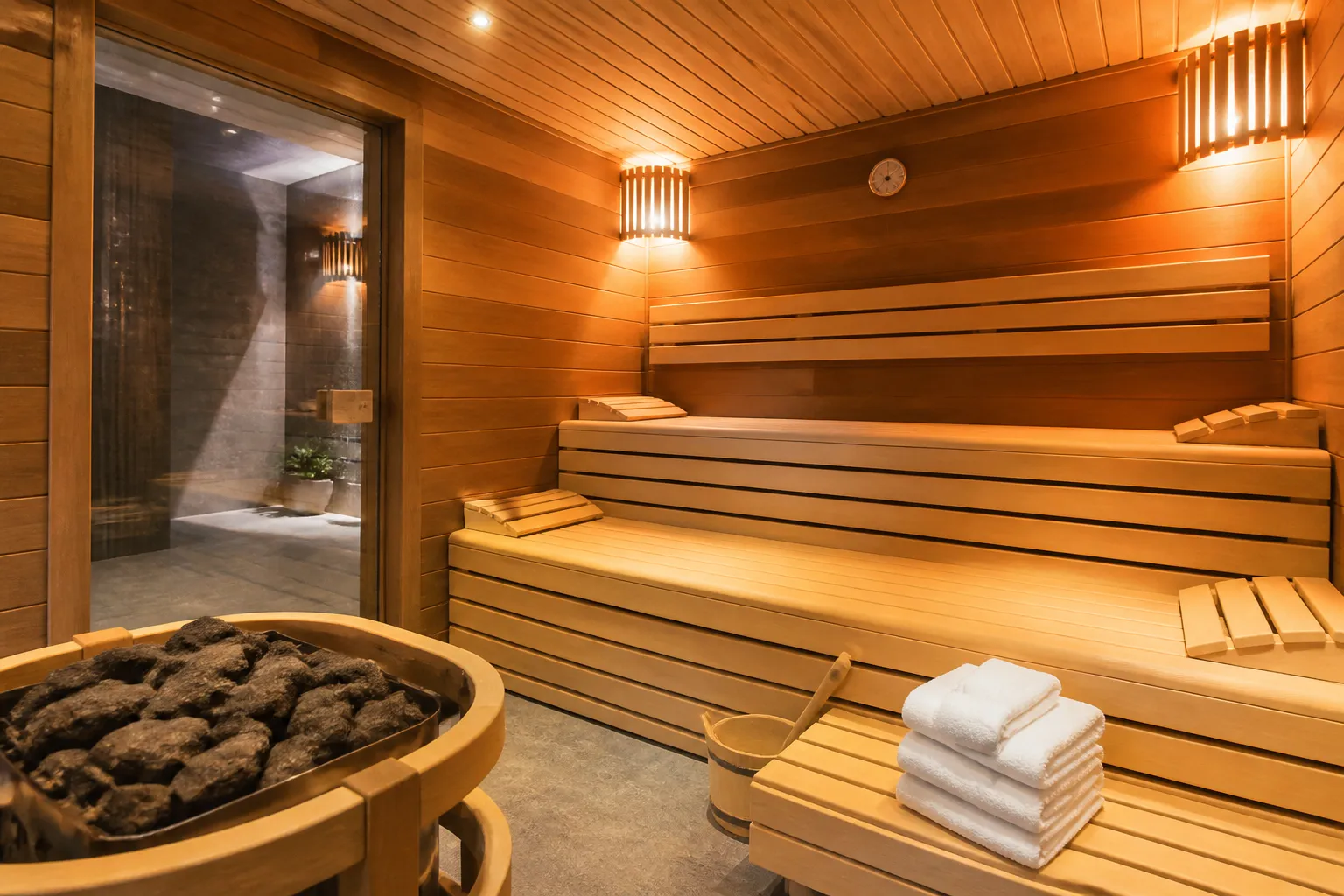
A hotel sauna combines two elements that complicate cleaning compared with an ordinary room: a delicate material like wood, which cannot tolerate the aggressive chemicals used on other surfaces, and a high-temperature, high-humidity environment, which encourages bacteria and mould growth without a rigorous protocol.
This article describes the correct hygiene protocol for cleaning a sauna in a hotel.
Contents
- Why a sauna needs a dedicated protocol
- Daily cleaning of wood surfaces
- Sanitising between uses
- Managing humidity and ventilation
- Products compatible with wood
- Checking for mould and fungus
- Deep cleaning frequency
Why a sauna needs a dedicated protocol
The high temperatures and humidity typical of a sauna create an environment favourable to microbial growth, while direct skin contact with wooden surfaces (benches, backrests) increases the risk of transmission if hygiene is not managed properly. Unlike other spa areas, a sauna therefore needs a balance between rigorous hygiene and protecting a material that is easily damaged by unsuitable products.
Daily cleaning of wood surfaces
Daily cleaning of benches and wooden surfaces involves removing visible residue (sweat, hair) with a damp cloth and a detergent specific to sauna wood, followed by complete drying to prevent residual moisture from encouraging mould growth. Excess water should be avoided, as it can seep into the wood fibres and compromise the structure over time.
Sanitising between uses
In properties with a steady flow of guests, a quick check and clean of directly touched surfaces (benches, headrests) between uses reduces the risk of transmission and maintains an adequate hygiene level throughout the day, not just with the end-of-day deep clean.
Managing humidity and ventilation
Properly managing ventilation between uses matters as much as surface cleaning: a room left closed and damp between uses encourages mould growth far faster than a properly aired one. The sauna should be left open long enough to reduce residual humidity before the next use, whenever the booking schedule allows it.
Products compatible with wood
Products used in the sauna need to be specifically formulated for wooden surfaces exposed to heat and humidity: overly aggressive detergents can dry out or bleach the wood, while unsuitable oil- or wax-based products can leave residue that melts with heat and soils guests’ skin. A company experienced with spa areas knows these products and uses them appropriately for each type of wood present.
Checking for mould and fungus
A regular visual check of joints and corners less exposed to ventilation catches early signs of mould or fungus, which can develop quickly in a hot, humid environment if left untreated. Acting promptly on an early sign avoids having to deal later with a more invasive treatment or, in more serious cases, replacing the affected surfaces.
Our cleaning service for hotels includes specific protocols for spa and wellness areas, including saunas.
Deep cleaning frequency
Beyond daily cleaning, a sauna needs periodic deep cleaning, covering the complete treatment of all wooden surfaces and checking the condition of heating and ventilation systems. Frequency depends on how intensively it is used, but a monthly job is a good starting point for most properties.
If you manage a sauna area at your property and want to set up a dedicated hygiene protocol, get in touch for an assessment.