


Hotel steam room cleaning: the correct procedure
Published on
3 min read
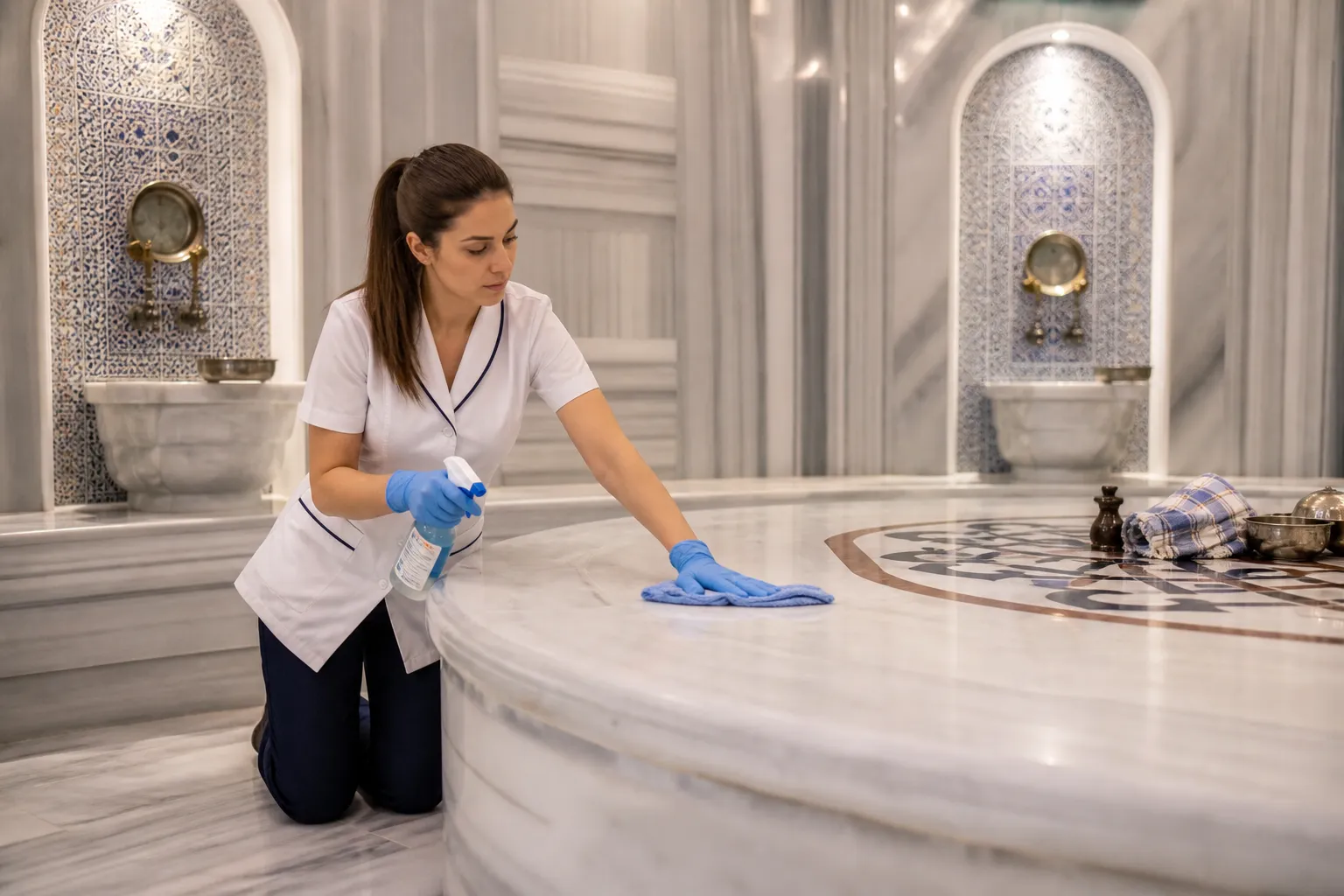
A steam room exposes surfaces to an even higher level of constant humidity than a sauna, with steam condensing on walls, seating and floors for the entire duration of use. Without a specific procedure, this condition encourages rapid bacteria and mould growth on surfaces that stay wet for hours.
This article describes the correct procedure for cleaning and sanitising a steam room in a hotel.
Contents
- Why a steam room is a higher-risk environment
- Cleaning ceramic and mosaic surfaces
- Sanitising seating and touch points
- Managing ventilation between uses
- Checking grout and joints
- The steam generator: related cleaning
- Recommended intervention frequency
Why a steam room is a higher-risk environment
Unlike a sauna, where dry heat partly limits microbial growth, a steam room combines heat with near-saturated humidity, a combination particularly favourable to bacteria and mould development if surfaces are not dried and sanitised regularly. The risk affects both guest health and the durability of materials, which can deteriorate faster in a constantly humid environment.
Cleaning ceramic and mosaic surfaces
Ceramic or mosaic surfaces, typical of a steam room, should be cleaned with specific detergents that remove limescale and soap residue without damaging the grout. A non-abrasive cloth or sponge, paired with a pH-neutral detergent, is generally the safest choice to avoid compromising tile shine and integrity over time.
Sanitising seating and touch points
Seating and resting surfaces, in direct contact with guests’ skin, need specific sanitising after every use or, in properties with lower footfall, at an agreed frequency that still guarantees an adequate hygiene level throughout the opening hours.
Managing ventilation between uses
At the end of every session, it is important to run the ventilation system or open up the room to reduce residual humidity, before closing it again for the next use. A steam room left closed and saturated with humidity between uses considerably speeds up mould formation, especially in corners and areas less exposed to air exchange.
Checking grout and joints
Grout lines between tiles are the most vulnerable point of a steam room: constant humidity tends to work its way into the joints, encouraging black-green mould growth if not checked regularly. A periodic visual check, with immediate action at the first signs, stops the problem spreading to a wider area, which would later require a more costly refurbishment.
The steam generator: related cleaning
The system generating the steam needs specific maintenance and cleaning, often handled by a specialist technician, because limescale build-up in the generator reduces efficiency and can compromise its operation over time. Coordination between the cleaning supplier and the system’s maintenance technician avoids the two interventions overlapping inefficiently.
Our cleaning service for hotels also covers spa areas, including steam rooms, with dedicated protocols.
Recommended intervention frequency
Beyond daily surface cleaning, a steam room needs a thorough sanitising job at least weekly, covering grout, joints and drainage systems, plus a check of the steam generator according to the manufacturer’s guidelines.
If you manage a steam room area at your property and want to set up an appropriate cleaning protocol, get in touch for an assessment.