


Hotel waste sorting: how to organise it
Published on
3 min read
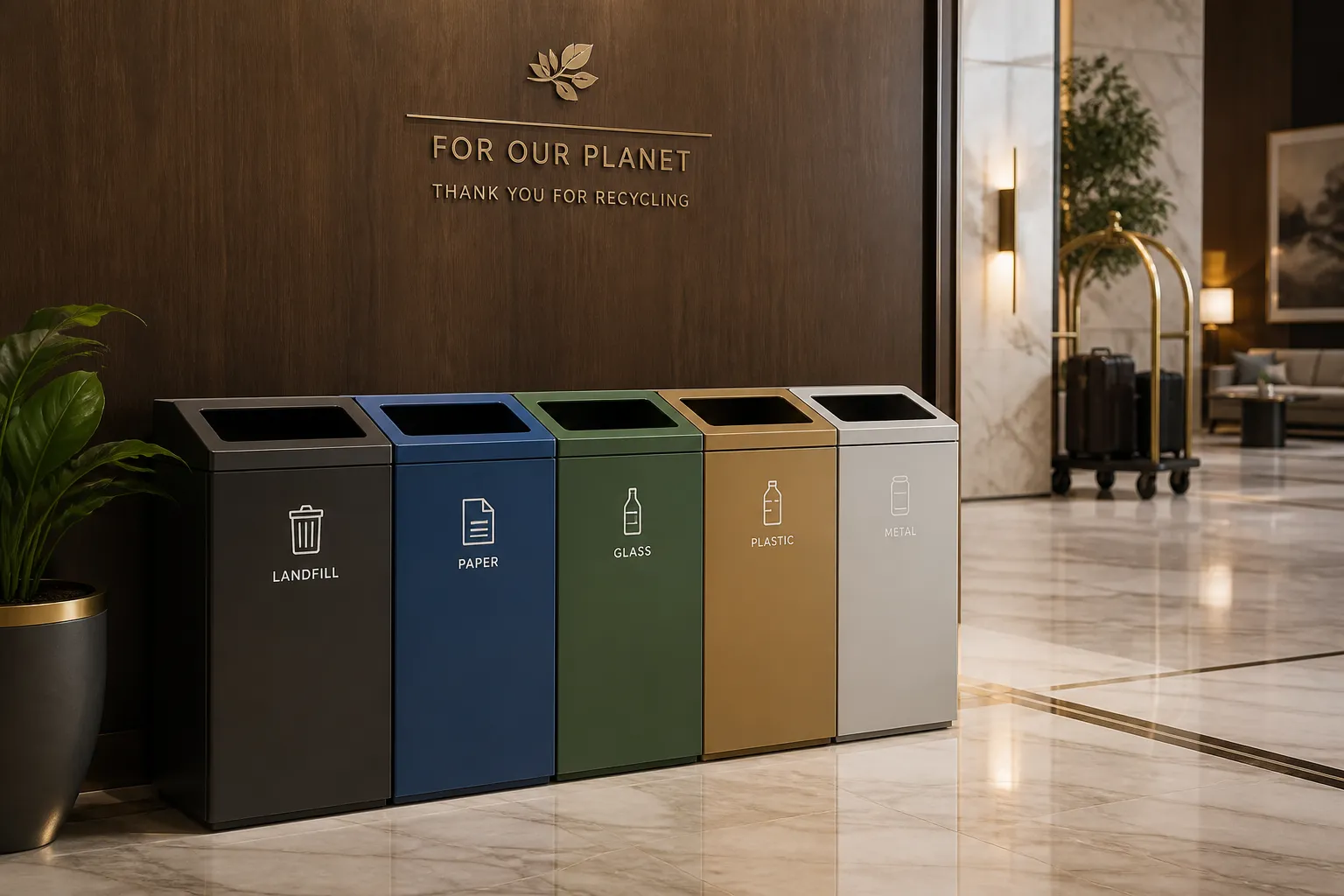
A hotel produces a far more varied volume of waste than a private home: kitchen packaging, organic waste from the restaurant, glass from the bar, paper from offices, and mixed waste from rooms. Organising effective waste sorting across this variety of streams needs a system designed specifically for it, different from a household setup.
This article explains how to set up waste sorting management in a hotel, from rooms through to technical storage areas.
Contents
- Why a hotel needs a dedicated system
- Waste sorting in the room
- Organic waste: the kitchen as a critical point
- Waste management in common areas
- The waste storage room: organisation and regulations
- Training staff on sorting
- Communicating sorting practices to guests
Why a hotel needs a dedicated system
Unlike a home, where waste streams are relatively simple, a hotel generates waste from very different sources: rooms, kitchen, bar, administrative offices, technical areas. Each of these sources produces a different mix of waste, with specific volumes and collection frequencies. A generically designed management system, without distinguishing between these sources, almost always produces ineffective or incomplete sorting.
Waste sorting in the room
Waste sorting in the room is often the weakest link in the system, since it depends on guest behaviour more than internal organisation. Providing clearly distinct bins in the room, with simple, visible labelling, significantly improves sorting quality compared with a single generic bin. Housekeeping staff, during turnaround, then need training to correctly complete material separation before taking it to the property’s collection points.
Organic waste: the kitchen as a critical point
The kitchen is a hotel’s main source of organic waste, and needs a specific collection and disposal system, often subject to dedicated regulations for food waste management. An organic waste bin that is not properly cleaned and emptied frequently quickly becomes a source of odours and a potential pest attractant, a point that links directly to the property’s pest control plan.
Waste management in common areas
Common areas (lobby, corridors, event rooms) need collection points positioned strategically, visible enough to encourage correct use by guests and external visitors, but also aesthetically integrated into the space. A collection point that is too hidden gets ignored; one that is too intrusive spoils the look of common areas: striking the right balance takes care at the space-planning stage.
The waste storage room: organisation and regulations
The room dedicated to temporarily storing waste before collection by the public service operator or a private supplier must meet specific hygiene requirements: physical separation of the different fractions, adequate ventilation, and regular cleaning to prevent dirt and odour build-up. This room is also one of the points a regulatory inspection checks most closely, both for hygiene and for correct material separation.
Training staff on sorting
A waste sorting system only works if staff apply it correctly and consistently, not just in the first few days after it is introduced. Training therefore needs repeating periodically, with spot checks on sorting quality, especially in departments (kitchen, housekeeping) producing the highest waste volumes.
Our cleaning service for hotels includes support in organising a property’s waste sorting flows.
Communicating sorting practices to guests
Communicating a property’s waste sorting practices to guests clearly and unobtrusively increases participation and reduces sorting mistakes in the room. A simple sign, with icons easily understood even by foreign guests, is often more effective than detailed written instructions that are rarely read closely.
If you want to review or set up your property’s waste sorting system, get in touch for an assessment.