


Managing sick leave for hotel cleaning staff
Published on
3 min read
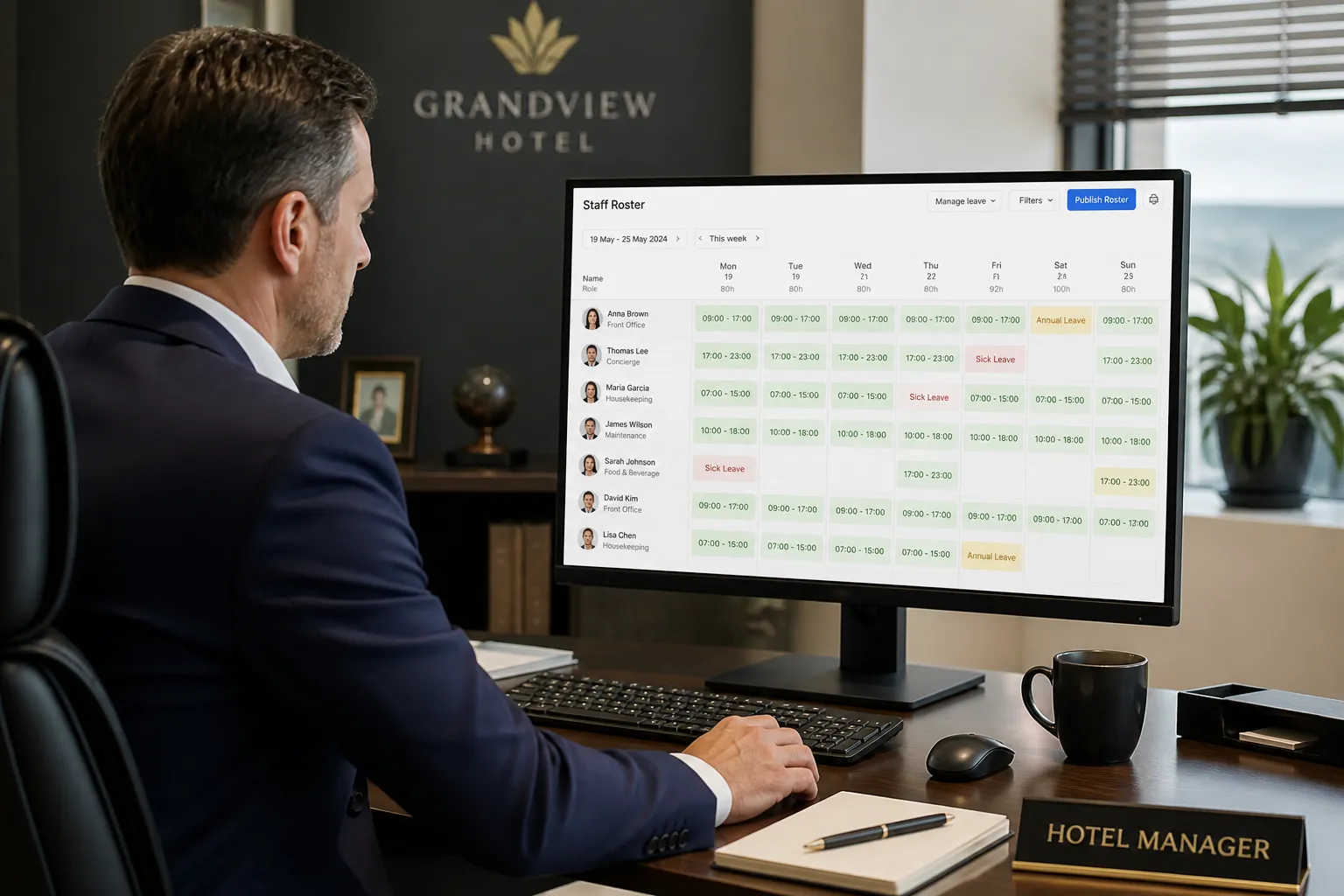
Sick leave in a hotel’s cleaning department, especially during high-occupancy periods, can create immediate operational pressure: the rooms needing cleaning don’t decrease, but available staff do. Handling this situation without notice requires a plan defined in advance, not improvised in the moment of the emergency.
This article explains how to manage sick leave among hotel cleaning staff without compromising the service standard.
Contents
- Why a plan needs defining in advance
- In-house staff: coverage options
- The role of an outside backup supplier
- Redefining priorities when understaffed
- Communicating with reception and guests
- Handling the contractual aspects
- Prevention: reducing how often absences occur
Why a plan needs defining in advance
Sick leave is by nature unpredictable, which makes it pointless to plan for a specific instance, but it is entirely possible to plan the organisational response to a generic absence in advance: who to contact, which priorities to follow, and which alternative resources to activate. Having this plan already defined drastically cuts reaction time when the emergency actually happens.
In-house staff: coverage options
The first coverage option for an absence is often in-house: part-time staff available for extra shifts, or a temporary redistribution of workload among present staff, perhaps accepting a slightly less thorough standard for lower-priority rooms on the day of the emergency.
The role of an outside backup supplier
Many properties, especially medium and large ones, keep an agreement with an outside cleaning supplier that can be activated quickly for extraordinary needs, including unexpected absences among in-house staff. This type of agreement, even if not used daily, provides a safety net that avoids having to handle every emergency solely with the in-house resources available at that moment.
Redefining priorities when understaffed
When available resources are not enough to cover the day’s needs, priorities need explicitly redefining: rooms with an expected check-in always come before those with staying guests, and non-negotiable minimum standards (bathroom, linen) need maintaining even at the cost of postponing less critical jobs such as thorough cleaning of surfaces not in direct contact with guests.
Communicating with reception and guests
In case of temporary understaffing, timely communication with reception makes it possible to better manage guest expectations, for example by slightly delaying the availability of some rooms rather than offering a room not yet ready to the usual standard.
Our cleaning service can act as backup for properties that want to guarantee service continuity even when in-house staff are unexpectedly absent.
Handling the contractual aspects
Sick leave also involves contractual aspects that need handling correctly: documenting the medical certificate, managing pay according to the applicable collective agreement, and timely reporting to the relevant authorities. Precise administrative handling of these aspects prevents later disputes with staff.
Prevention: reducing how often absences occur
While sick leave cannot be eliminated, some preventive measures (training on correct manual handling, adequate protective equipment, a sustainable workload) can help reduce how often it occurs over time, indirectly also reducing the organisational pressure linked to managing emergencies.
If you want to evaluate a backup agreement for cleaning at your property, get in touch for a discussion.